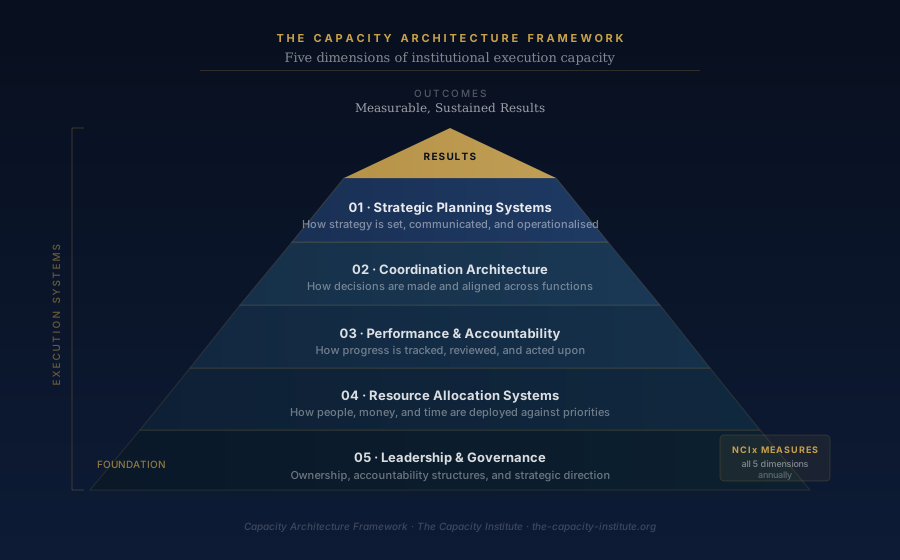
The Capacity State Framework
Dimension 01
Strategic Clarity
The degree to which an institution has clear, coherent, and widely understood strategic priorities — and the extent to which those priorities drive resource allocation and operational decisions.
Dimension 02
Execution Systems
The quality of the operational systems — planning, resource management, performance tracking, decision architecture — that translate strategy into action.
Dimension 03
Accountability Architecture
The structures and norms of accountability — who is responsible for what, how performance is reviewed, and what consequences follow from delivery or non-delivery.
Dimension 04
Human Execution Capital
The skills, knowledge, and habits — in individuals and teams — required to manage complex delivery. Distinct from general capability: this is specifically execution competence.
Dimension 05
Execution Culture
The institutional norms, expectations, and behaviours that either support or undermine delivery — including attitudes to deadlines, performance, accountability, and learning from failure.