The Argument
The Prevailing Assumption Is Wrong
For decades, institutional reform has operated on a shared assumption: that better outcomes require better policies. Improve the plan. Sharpen the strategy. Hire better advisors. Produce a better document.
This assumption is not only incomplete — in many cases, it is the source of the failure it seeks to fix. The policy is rarely the problem. The execution system is.
The Execution Gap
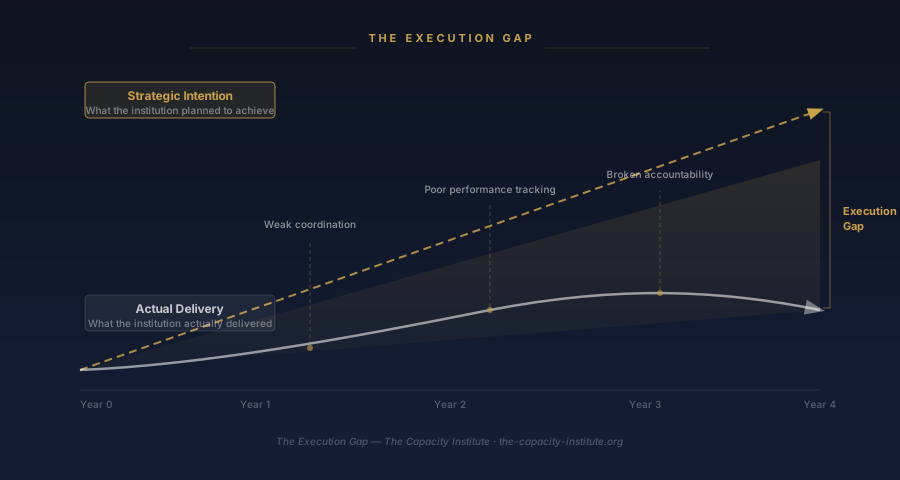
Across governments, corporations, and development organisations globally, a consistent pattern emerges: strategy is produced with sophistication; delivery is erratic, slow, and fragmented. The gap between what institutions intend and what they achieve is not random — it is structural.
We call this the Execution Gap. And it is the defining institutional challenge of our era.
Why It Persists
The Execution Gap persists because institutions invest heavily in strategy and almost nothing in the systems required to execute it. Coordination architectures are fragile. Implementation disciplines are weak. Institutional learning barely exists. Accountability is performative rather than structural.
The result is that even well-resourced institutions with capable people and coherent strategies consistently underperform — not because of bad intent, but because of absent or broken execution capacity.
What This Means for How We Work
The Capacity Institute was founded on the conviction that execution capacity is not a talent problem or a political problem — it is a systems problem. And systems can be diagnosed, designed, and strengthened.
This conviction shapes our research agenda, our advisory practice, and our educational programmes. We work at the level of systems — not individuals, not policies, not rhetoric.